
The software hasn’t stood still. Has the way you use it?
12th August 2026 | Mark Smith
When an HR platform is first introduced, a great deal of work goes into deciding how it should support the organisation.
Processes are agreed, workflows are configured, managers are trained and the system is prepared for launch. At that point, it reflects the organisation’s priorities and ways of working.
But organisations do not stand still.
Teams change. New leaders arrive. Business units grow or restructure. Priorities shift and processes evolve. What worked well two years ago may no longer fully support what the organisation needs today.
Yet the way HR technology is used often remains much as it was when the system first went live, even as new capabilities become available.
An implementation reflects a point in time
Launching a platform should not mean that every decision about how it is used is fixed permanently.
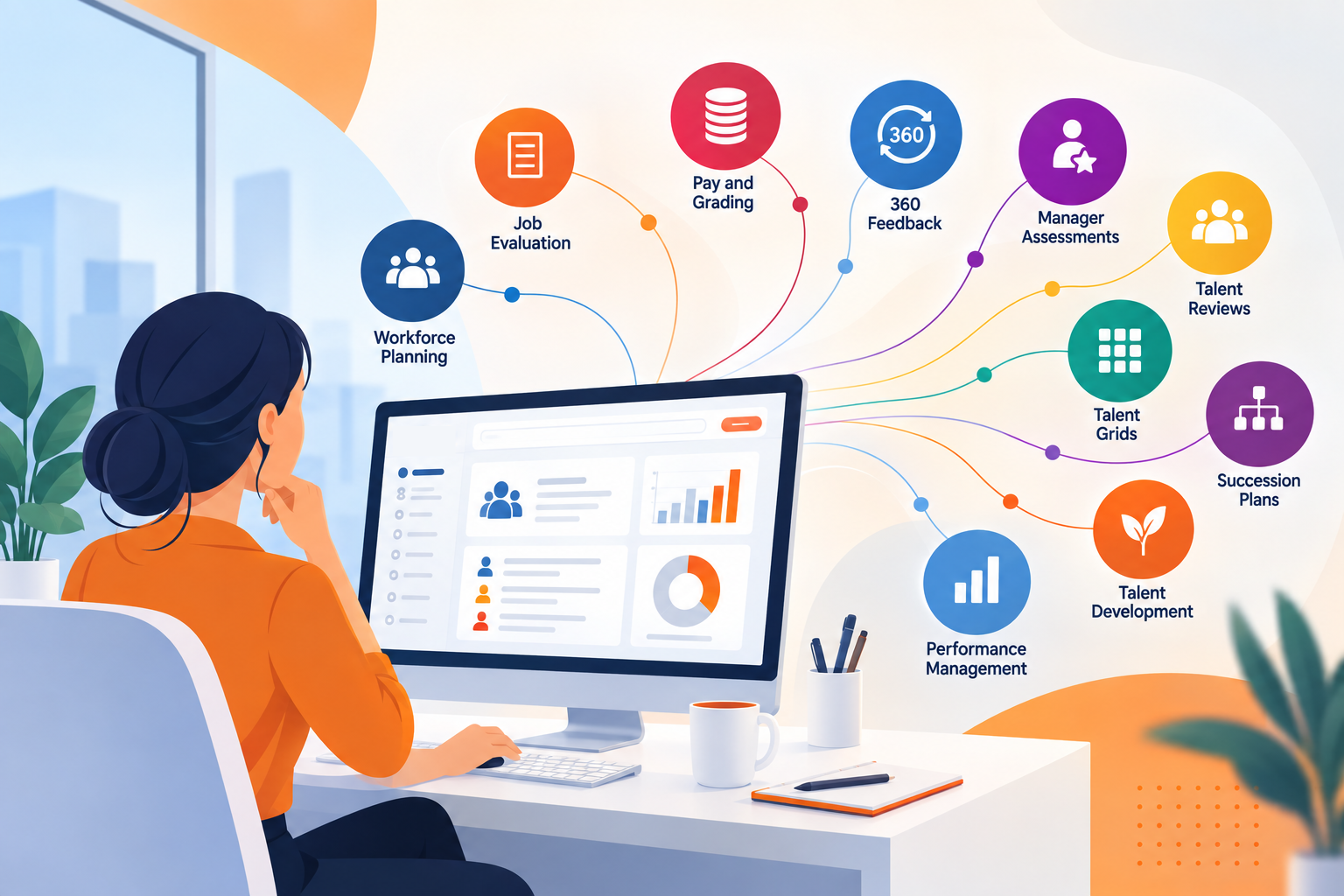
Succession planning may have become more important. Leaders may need a clearer view of talent across different business units. Managers may need more structure when assessing performance and potential. Development activity may need to be linked more closely to succession priorities and wider organisational needs.
The system still functions, but the way it is being used may no longer reflect the organisation as it operates.
Job evaluation is not simply an exercise in analysing information. Its purpose is to provide a structured and consistent framework for assessing the relative value of work roles within an organisation. That distinction is important because it highlights a fundamental difference between what AI is designed to do and what job evaluation is designed to achieve.
Review the processes, not just the platform
The question isn’t necessarily whether the organisation needs new technology. It may be whether the technology is still being used to support the right processes.
As organisations evolve, established talent processes can become disconnected from wider organisational priorities. Succession planning may operate separately from talent reviews. Development activity may not be linked to the capabilities the organisation will need in the future. Performance and potential may be assessed, but the information isn’t necessarily being used to inform wider talent decisions.
A review of the current approach can reveal where these connections have been lost.
It can also highlight where processes have become more complicated than they need to be, where managers are relying on workarounds, or where valuable talent information is being captured but not used effectively.
The aim isn’t to change processes for the sake of change. It is to make sure the technology supports the way the organisation needs to work now, rather than simply reproducing decisions made when the platform was first implemented.
That means asking some straightforward questions:
• Are managers getting the information they need?
• Are talent discussions consistent across the organisation?
• Are succession and development decisions connected?
• Is important information being captured but not used?
• Are employees clear about what they need to develop for future opportunities?
• And are there processes that have remained unchanged simply because “that’s how the system was originally configured”?
It may be time to take another look
Does your technology still reflect what your organisation needs?
Pilat’s software continues to evolve, introducing new functionality and improved ways of supporting talent processes.
Talk to us about reviewing how Pilat could better support your current talent priorities →