
A flexible approach to complex onboarding
Managing complex, long-term onboarding across thousands of employees
We recently worked with a large organisation to design and configure a working version of an onboarding process for several thousand new employees each year.
This was not a process that could be managed through a single checklist. Onboarding could continue for many months, vary between different employee groups and involve managers, mentors, colleagues and subject specialists.
The employee’s manager needed to remain responsible for the process as a whole. However, individual activities might be completed by other people, depending on the employee’s role and the support they required.
Everyone involved needed to know what they were responsible for and when it was due. Managers also needed one place to see what had been completed, what was still outstanding and what was coming next.
Understanding how the process needed to work
We started by working through the detail of the organisation’s onboarding process.
This included when an employee should enter the process, which activities should apply to everyone, what might vary between different groups and who could be asked to contribute. We also looked at the review points required during the onboarding period and the information that should be recorded at each stage.
We then configured a working version of the process in Pilat.
Using information from the organisation’s existing HR system, the appropriate onboarding programme could be assigned automatically to the employee and their manager.
Activities and review points were set out across the onboarding period, with due dates, status information and progress visible in one place. Managers could see what had been completed, what required attention and which activities would become available later.
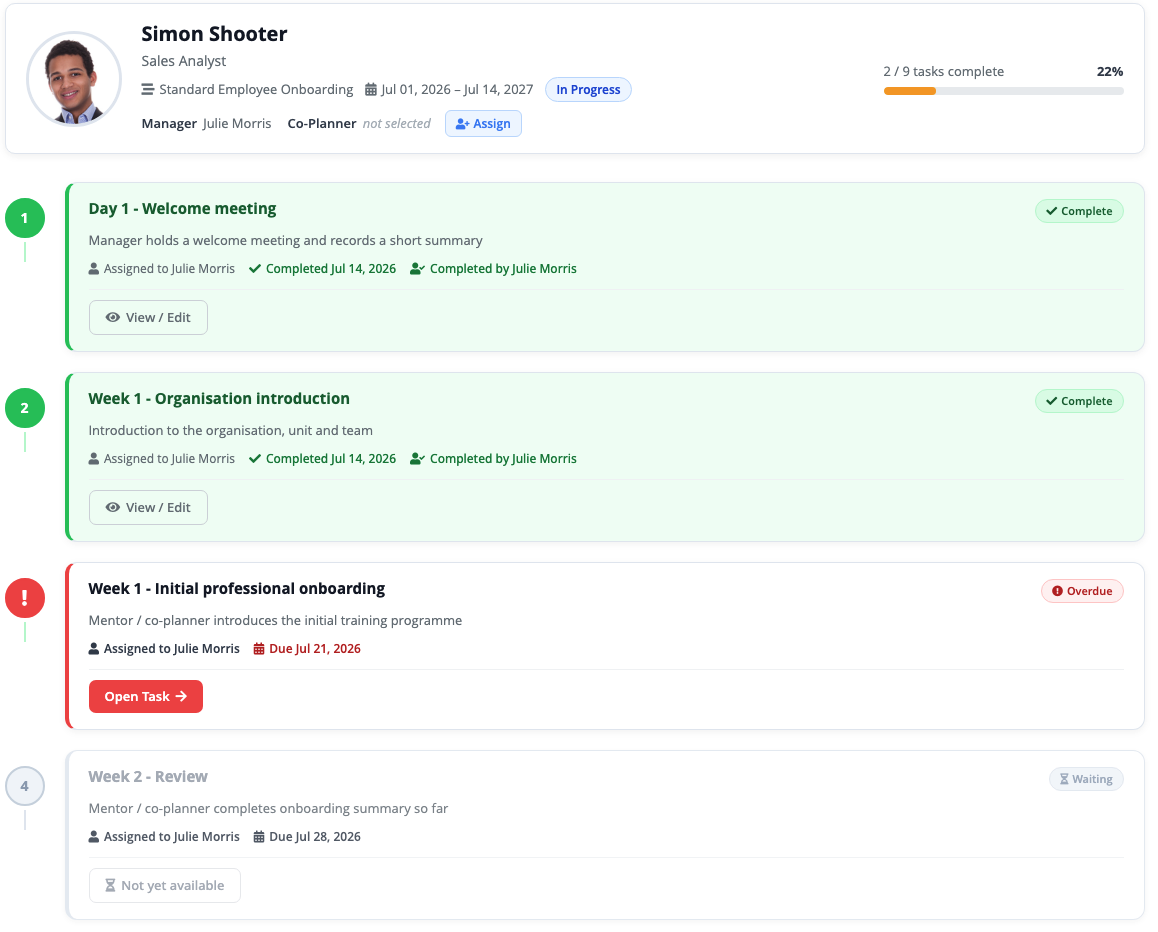
Sharing responsibility without losing oversight
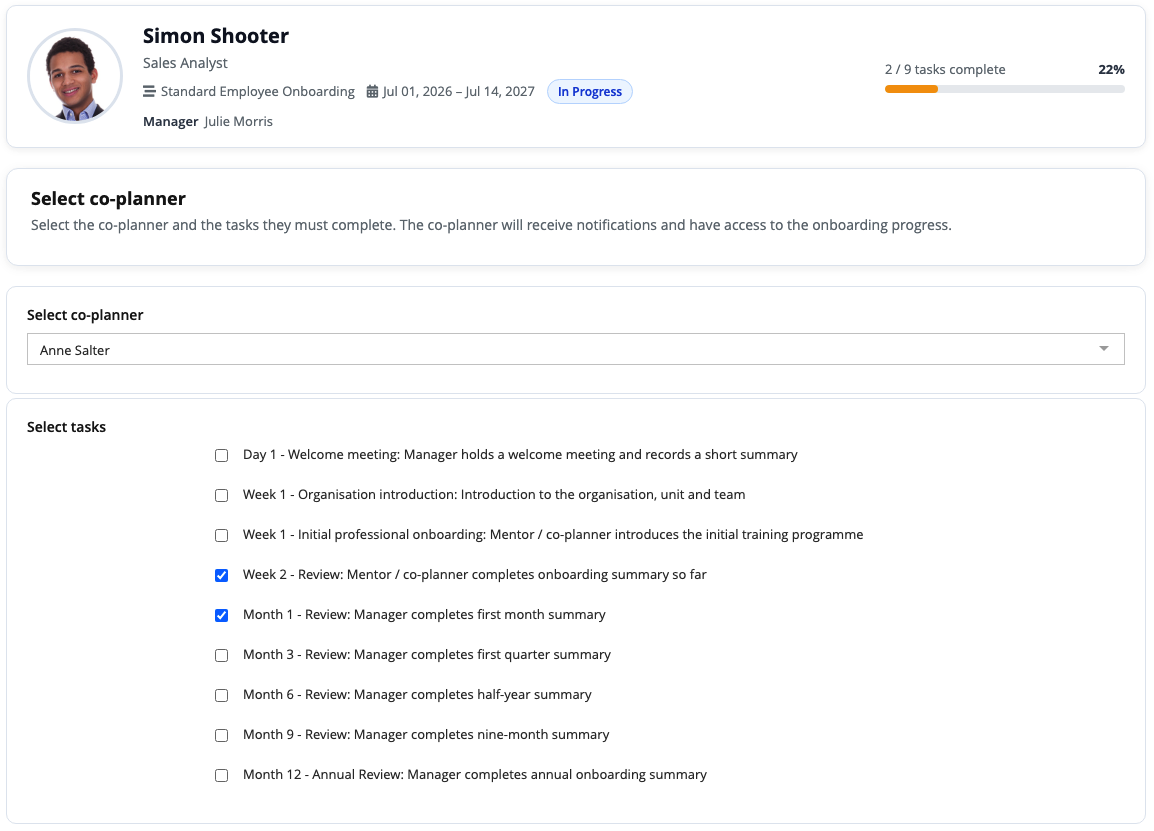
Managers could complete activities themselves or assign selected tasks to another contributor, described in the system as a co-planner.
This person might be a mentor, colleague or subject specialist responsible for a particular part of the employee’s onboarding. For example, a mentor could introduce an initial training programme or complete an early review.
The contributor would receive a notification and could access only the activities assigned to them. The manager would continue to see progress across the complete process.
Recording more than task completion
The process was designed to capture more than whether an activity had taken place.
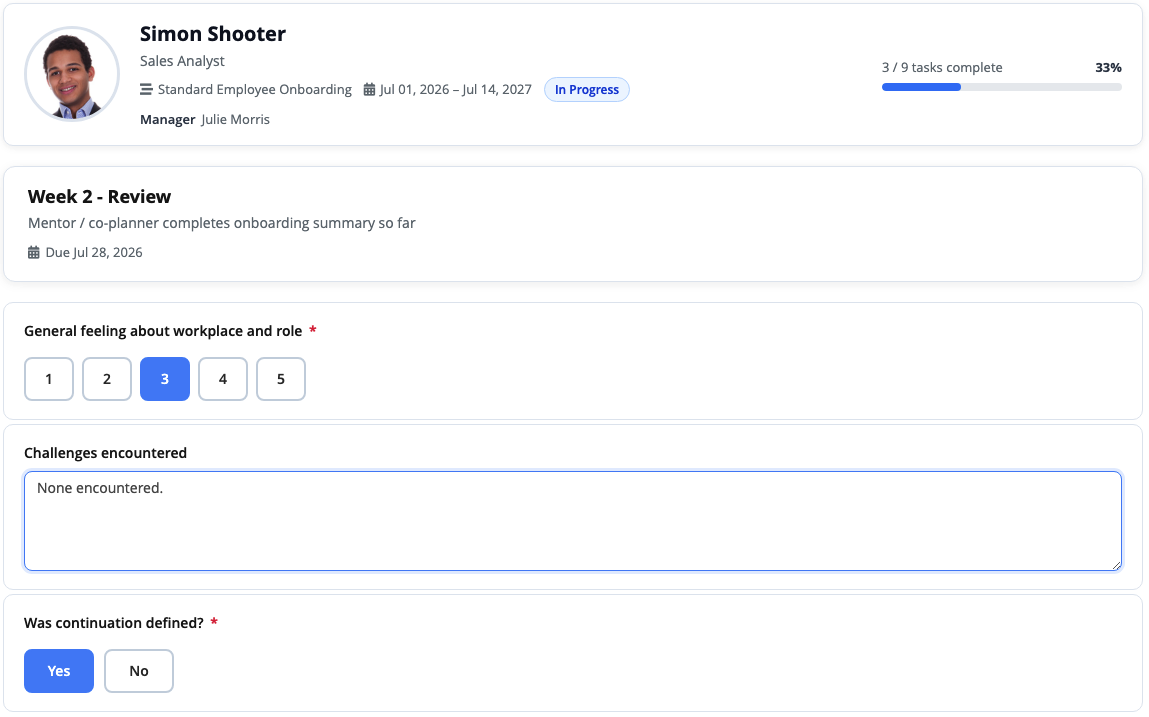
At planned review points, the manager or co-planner could add ratings and comments, record any challenges the employee had encountered and confirm whether the next stage of onboarding had been agreed.
This would give the organisation a clearer record of how each employee was progressing and made it easier to identify where someone might need additional support.
A clearer way to manage onboarding
The configured process showed how onboarding involving several people and extending over many months could be managed in one place.
In the working version, managers could retain oversight, contributors would have clear responsibilities and progress could be followed without relying on separate spreadsheets, emails and checklists. The design also retained the flexibility to vary activities and responsibilities for different employees.
This is also an example of the wider range of processes Pilat can support. The same flexibility used to configure performance, talent and development processes can be applied to other areas where responsibilities, contributions and progress need to be managed clearly. For existing clients, that may mean extending how the platform is already used. For other organisations, it shows how Pilat can be configured around a specific process rather than requiring that process to fit a standard system.