PSC Job Evaluation Scheme
For police forces and policing bodies

Our job evaluation solution is the preferred technology partner to:




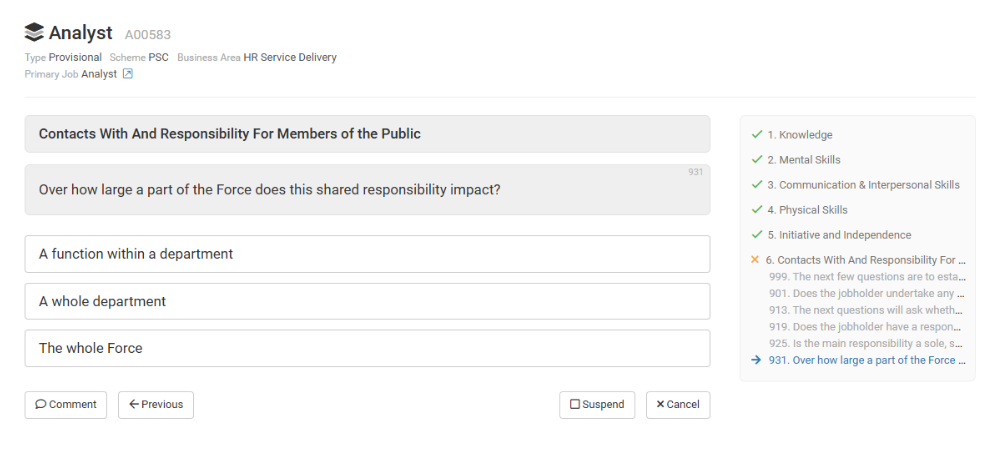
The LGA (Local Government Association) devised the PSC (Police Staff Council) scheme to support single status to align equal pay with work of equal value.
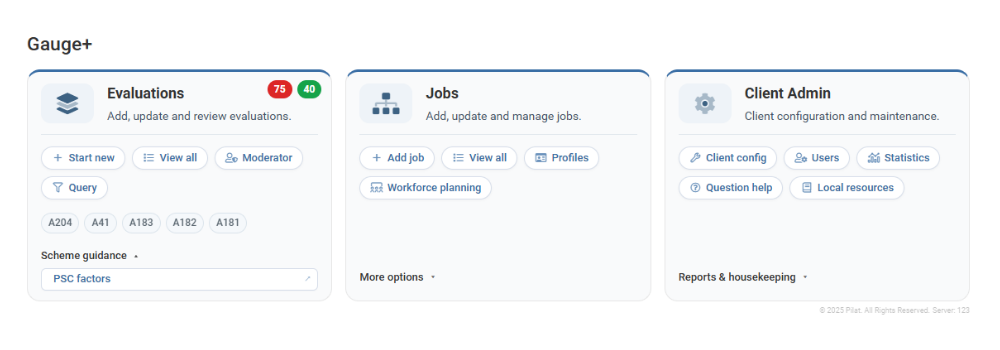
The Gauge+ software is designed to optimise the efficiency of the job evaluation process, incorporating the PSC’s analytical job evaluation scheme which is sound and robust and enables employers to produce appropriate job hierarchies based on relevant components.
PSC 13-Factor Scheme
The PSC 13-Factor Job Evaluation Scheme has been developed to comply with equal value principles and practices and to cover a wide range of police staff jobs. More recently, modifications have been made following experience of users in the police sector to ensure that it covers the full range of police staff jobs, including those being introduced as part of workforce modernisation projects, and in a user-friendly manner.
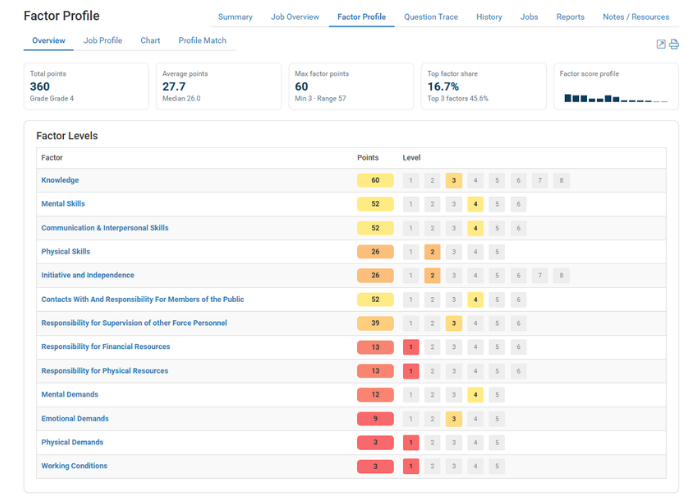
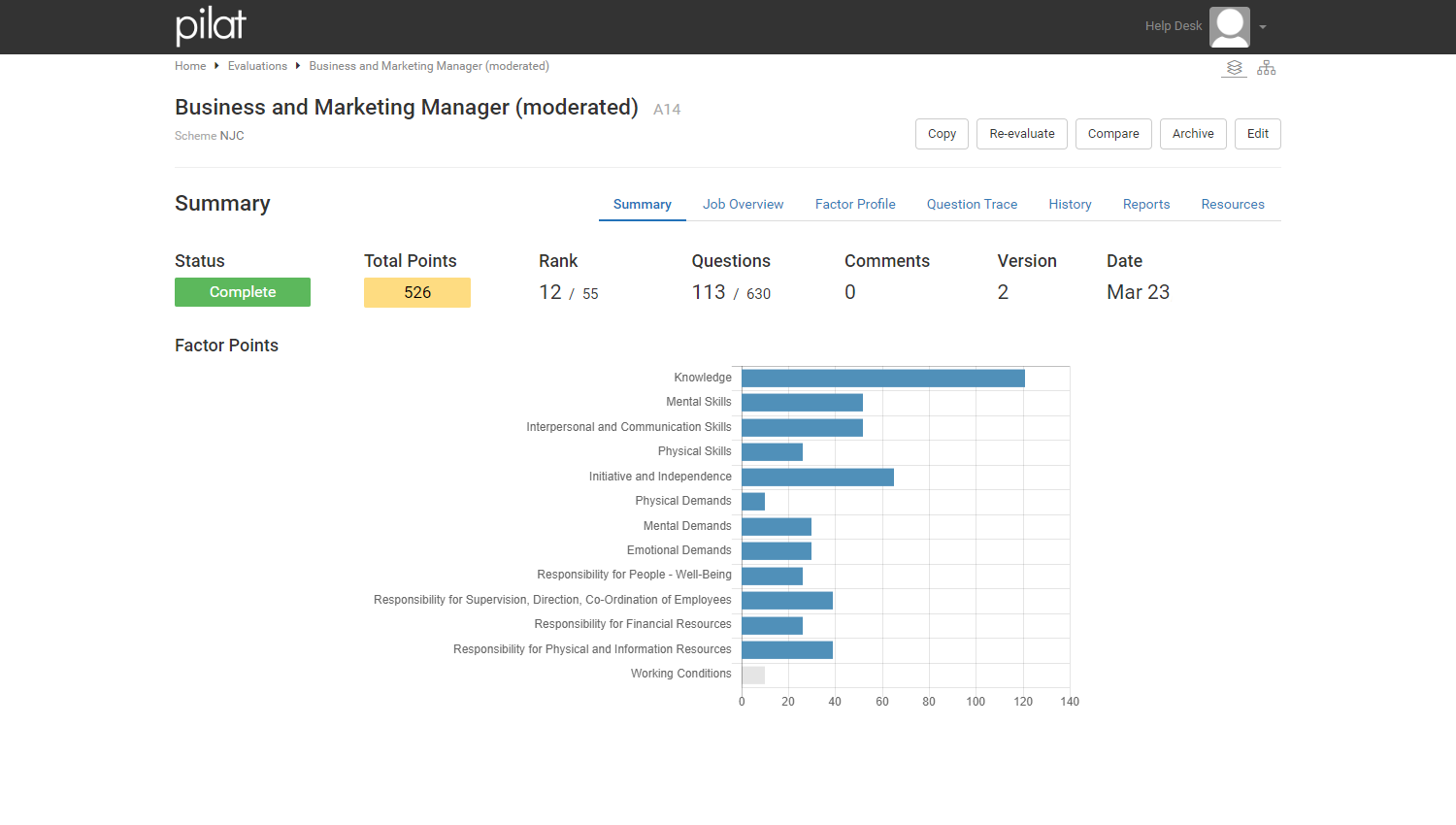
The factors that have been established define the worth of job, e.g. skills required, responsibilities, working conditions, etc., giving HR and Job Analysts the necessary information to review job roles.
- Knowledge
- Mental Skills
- Communication & Interpersonal Skills
- Physical Skills
- Initiative & Independence
- Contacts with and Responsibility for Members of the Public
- Responsibility for Supervision of Other Force Personnel
- Responsibility for Financial Resources
- Responsibility for Physical Resources
- Mental Demands
- Emotional Demands
- Physical Demands
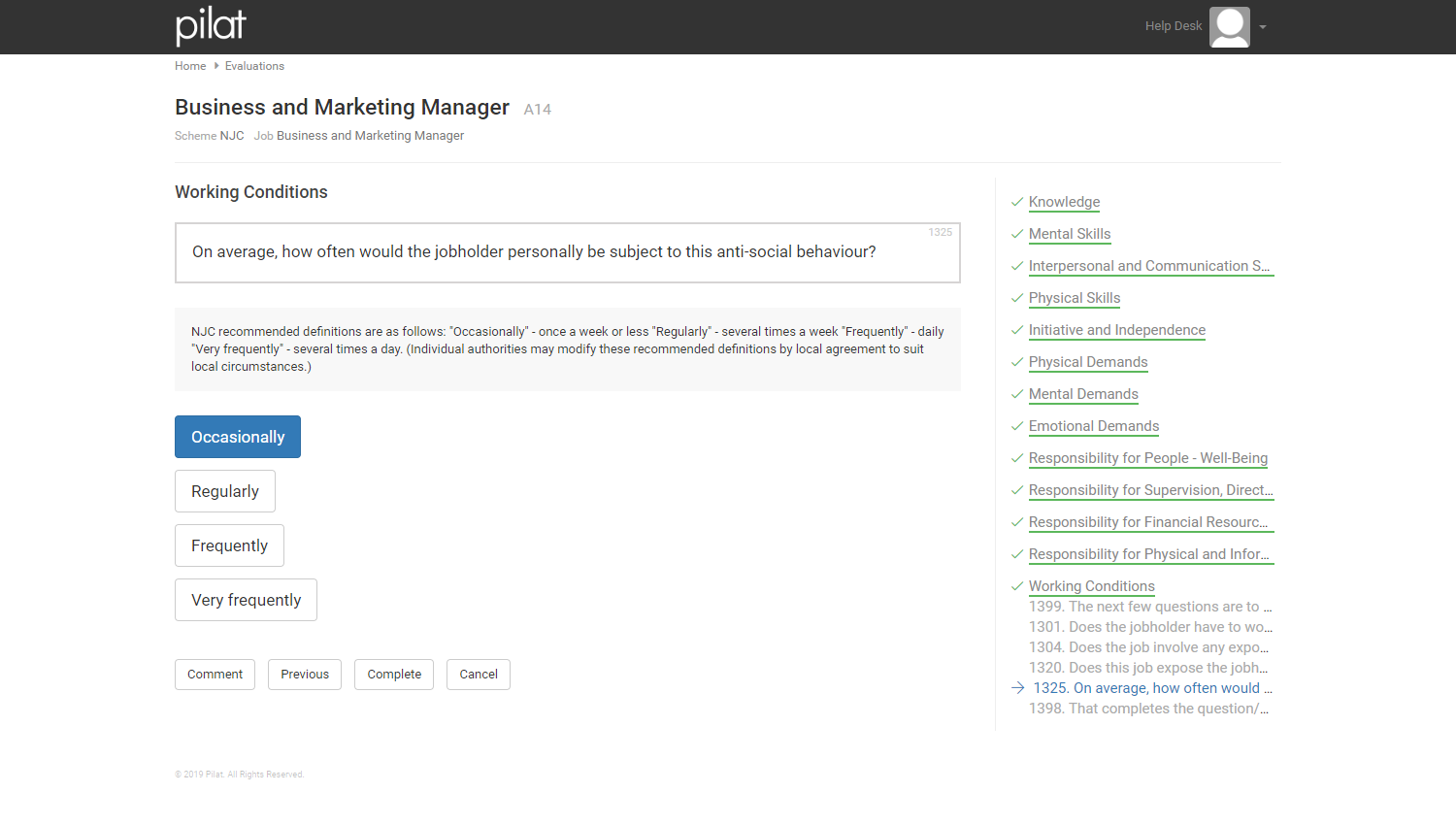
- Working Conditions
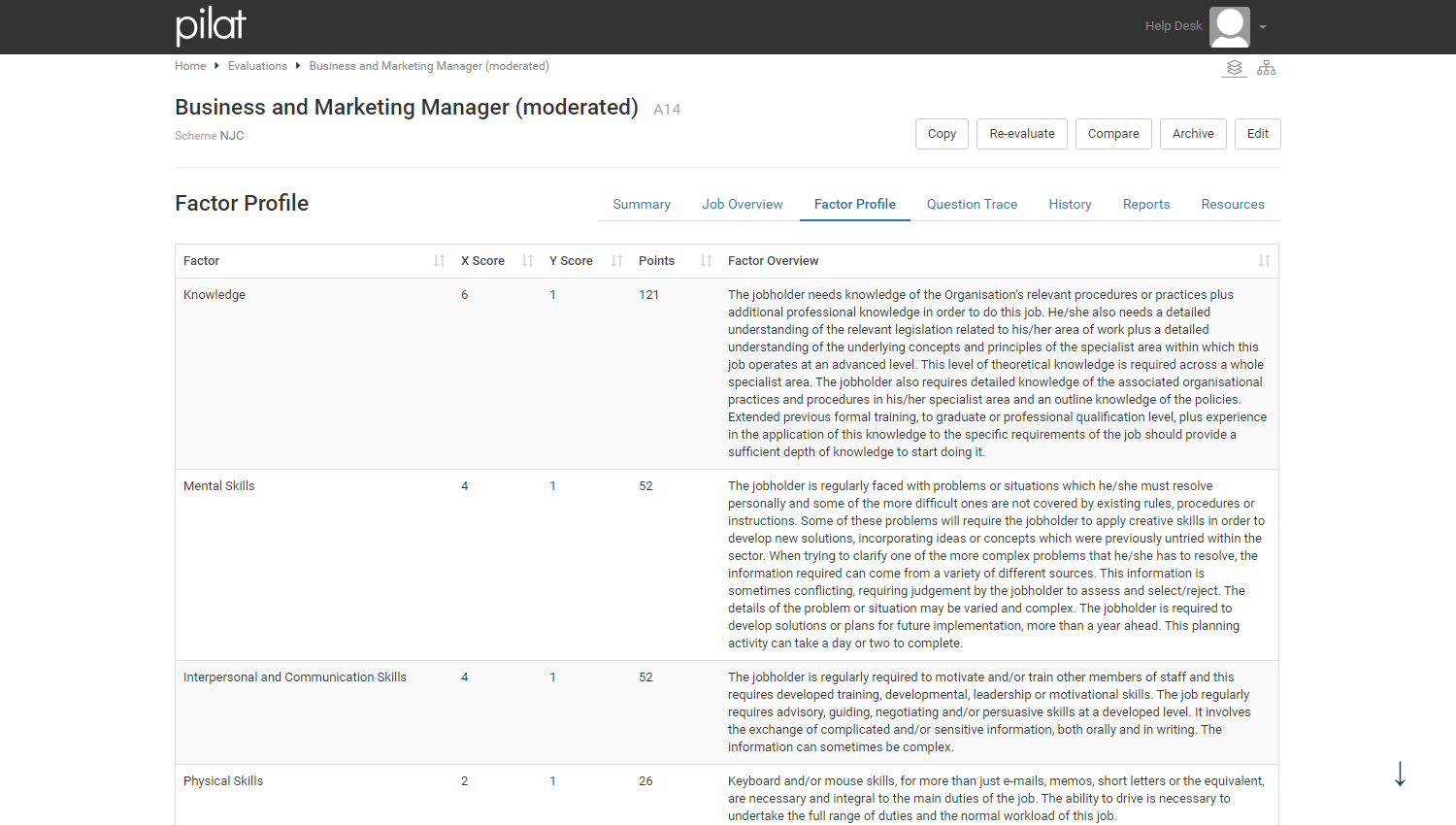
This factor measures the Knowledge required for the job. It covers all technical, specialist, procedural and organisational knowledge, including knowledge of the police service and how it operates, required for the job, including numeracy and literacy; knowledge of equipment and machinery; and knowledge of concepts, ideas, other cultures or languages, theories, techniques, policies, procedures and practices. It takes into account the breadth, diversity and range of knowledge and the depth and complexity of the understanding required. This factor does not take into account physical, mental and interpersonal/communications skills required, as these are covered by separate factors.
This factor measures the Mental skills required for the job. It includes analytical, mental and judgemental skills. It also includes creative and developmental skills, whether related to design, handling of people or development of policies and procedures; and planning and strategic skills. It takes into account requirements to gather, collate and analyse the facts needed to solve problems; and also requirements for imaginative thinking.
This factor measures the Communication and Interpersonal Skills required for the job. It includes oral, linguistic, sign and written communication skills. The emphasis of the factor is on the purpose to which the interpersonal and communication skills are put (for example, training, promoting, obtaining information from others, interviewing, gaining the co-operation of others, team working, advising, motivating, persuading, counselling, conciliating, negotiating, meeting the needs of others). The factor covers the complexity or contentiousness of the subject matter to be conveyed, and any requirements to exercise confidentiality or sensitivity. It takes into account the nature, diversity, cultural background and size of the intended audiences.
This factor measures the Physical Skills required for the job. It covers manual and finger dexterity, hand-eye co-ordination, co-ordination of limbs, and sensory co-ordination. It takes into account the purpose to which the skills are put and demands arising from the need to achieve specified standards of speed and precision.
This factor measures the scope allowed to the jobholder to exercise initiative and take independent actions. It takes into account the nature and level of supervision of the jobholder; the level and degree of direction and guidance provided by policies, precedents, procedures and regulations; and any requirements to organise or quality check own work.
This factor measures the contacts with and responsibility of the jobholder for individual, or groups of, members of the public. The emphasis of the factor is on the nature and extent of the contacts with or responsibility for the individuals or groups. It takes into account requirements for confidentiality in dealings with people.
This factor measures the direct responsibility of the jobholder for the supervision, coordination or management of Force personnel, or others in an equivalent position. It includes work planning and allocation; checking and evaluating the work of others; and training, development and guidance. It also includes responsibility for personnel functions for those for whom the jobholder has a formal supervisory responsibility, such as recruitment, discipline, appraisal, and planning, organising and long-term development of human resources. The emphasis of the factor is on the nature of the responsibility, rather than the precise numbers of Force personnel supervised, coordinated or managed. It takes into account the extent to which other employees contribute to the overall responsibility.
This factor measures the direct responsibility of the jobholder for financial resources, including cash, vouchers, cheques, debits and credits, invoices, budgets and income. It takes into account the nature of the responsibility, for example, correctness and accuracy; safekeeping, confidentiality and security; deployment and degree of direct control; budgetary and business planning responsibilities; planning, organising and long-term development of the financial resources. It also takes into account the degree to which other employees contribute to the overall responsibility, the frequency with which the responsibility is exercised and the value of the financial resources.
This factor measures the direct responsibility of the jobholder for physical resources, including manual or computerised information; data and records; office and other equipment; tools and instruments; vehicles; plant and machinery; land, construction works, buildings and fittings and fixtures; personal possessions, goods, produce, stocks and supplies, exhibits and evidential material, and safekeeping of stolen, retrieved or confiscated materials/property. It takes into account the nature of the responsibility, for example, safekeeping, confidentiality and security; deployment and degree of direct control; maintenance and repair; ordering, purchasing and replacement authority; planning, organising and long-term development of the physical resources. It also takes into account the degree to which other employees contribute to the overall responsibility, the frequency with which the responsibility is exercised and the value of the physical resources.
This factor measures the degree and frequency of the mental concentration, alertness and attention required by the job. It takes into account features which may make concentration more difficult, for example, repetitive work, interruptions or the need to switch between varied tasks or activities; and other forms of work-related pressure, for instance, arising from conflicting work demands. It also takes into account the responsiveness required of the jobholder.
This factor measures the nature and frequency of the Emotional Demands on the jobholder arising from contacts or work with other people. It takes into account the situation in which the contacts or work with other people occur, for example, whether they are angry, difficult, or upset; or whether their circumstances are such as to cause stress to the jobholder, for example, if the people concerned are victims of violence, at risk of abuse, homeless or disadvantaged in some other way.
This factor measures the type, amount, continuity and frequency of the physical effort required by the job. It covers stamina as well as strength. It takes into account all forms of bodily effort, for example, that required for standing and walking, lifting and carrying, pulling and pushing. It also includes the physical demands involved in working in awkward positions, for example, bending, crouching, stretching; for sitting, standing or working in a constrained position; and for maintaining the required pace of work.
This factor measures exposure to disagreeable, unpleasant, uncomfortable or hazardous working conditions arising from the environment or from work with members of the public. It covers the frequency, duration and nature of conditions, such as dust, dirt, temperature extremes and variations, humidity, noise, vibration, fumes and smells, human or animal waste steam, grease or oil, inclement weather, lack of privacy or isolation, and the risk of illness or injury arising from exposure to diseases, toxic substances, machinery or work locations. It also covers abuse, aggression and risk of injury from people. The factor measures those aspects of the working environment which are unavoidable and integral to the job. Health and safety regulations and requirements are assumed to be met, but the requirement to wear protective clothing may create disagreeable or uncomfortable conditions. The emphasis of this factor is on the degree of unpleasantness or discomfort caused. This takes into account the frequency, intensity and duration of exposure to particular conditions; and the additional effect of variations or combinations of conditions.
Implementation
During implementation, we will schedule a project kick-off meeting to finalise key dates, milestones, and responsibilities associated to your Gauge+ site going live.
Once dates have been agreed by both parties, our developers will be able to start building your Gauge+ site. If you have been using the paper-based PSC scheme, we can migrate your historical data into the software giving you a full audit trail.
In preparation, for training, we will set up delegates attending training with user profiles. These user profiles will have full admin access to Gauge+ for training purposes, however, these settings can be changed post-training.
Training
When purchasing a Gauge+ software license, you will receive training from one of our Consultants here at Pilat. The training outlines the software functionality, selected scheme, critical questions, the Job Analysis process, job evaluation methodologies and options.
Training is suited to all levels, whether they are new team members requiring knowledge of the scheme or experienced Job Analysts seeking to strengthen their facilitation skills.
Your assigned Reward Consultant can offer guidance on appeals, identifying pay structure options, developing new pay, and grading structures, modelling assimilation costs of new pay structure and more.
Image Gallery

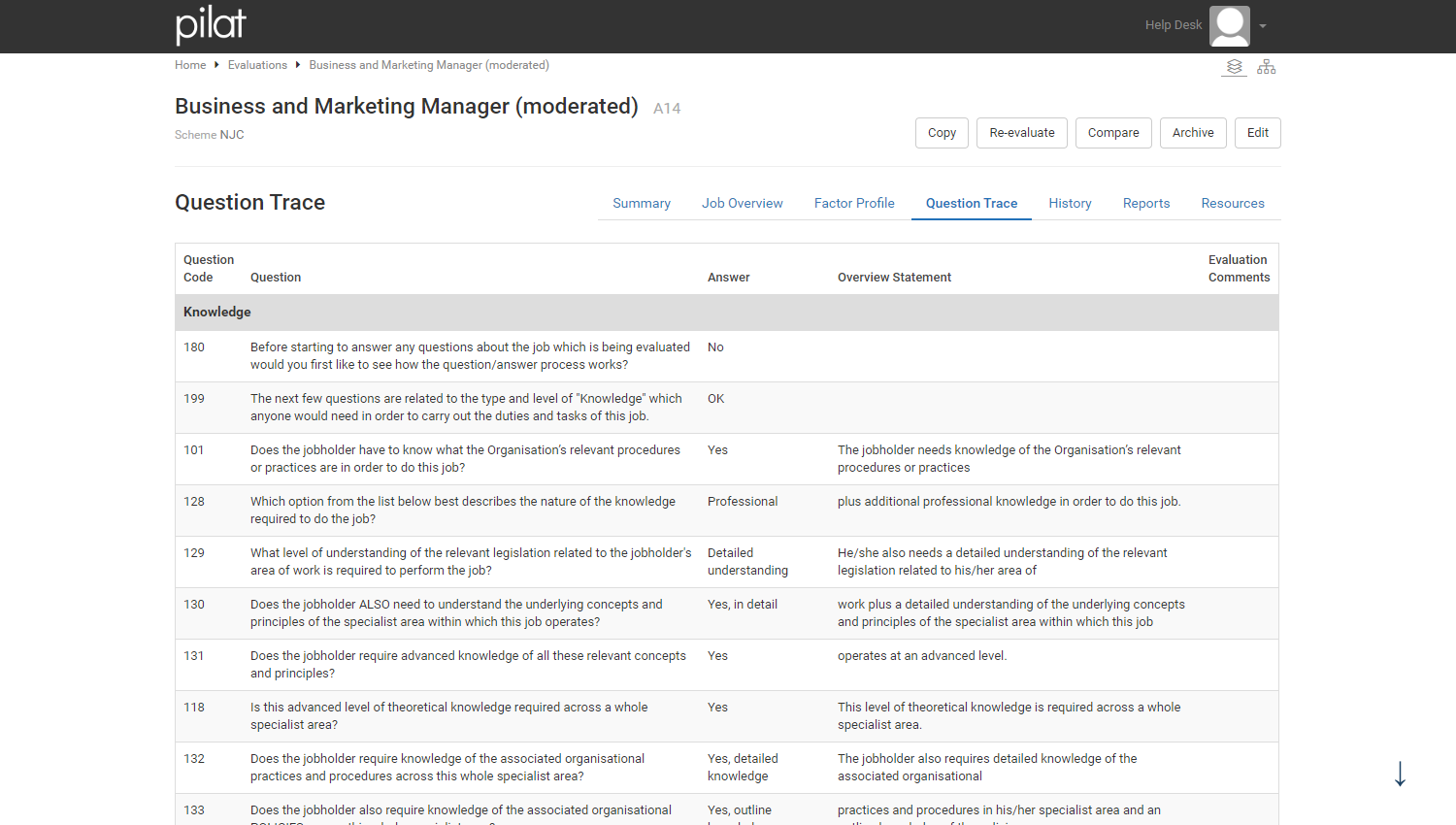




Click image to view our gallery
Find out more about the PSC Scheme
Resources