
Can AI Replace Job Evaluation?
10th August 2026 | Michelle Brown
Artificial intelligence is becoming increasingly embedded in HR and reward practices. From recruitment and workforce planning to skills analysis and pay benchmarking, organisations are exploring how AI can support faster and more informed decision-making.
It is therefore unsurprising that many organisations are beginning to ask whether AI could eventually replace traditional job evaluation and grading frameworks.
On the surface, the idea appears attractive. AI can analyse large volumes of information, identify patterns across thousands of roles and generate recommendations in seconds. As organisations look for greater efficiency and consistency, the potential benefits are easy to see.
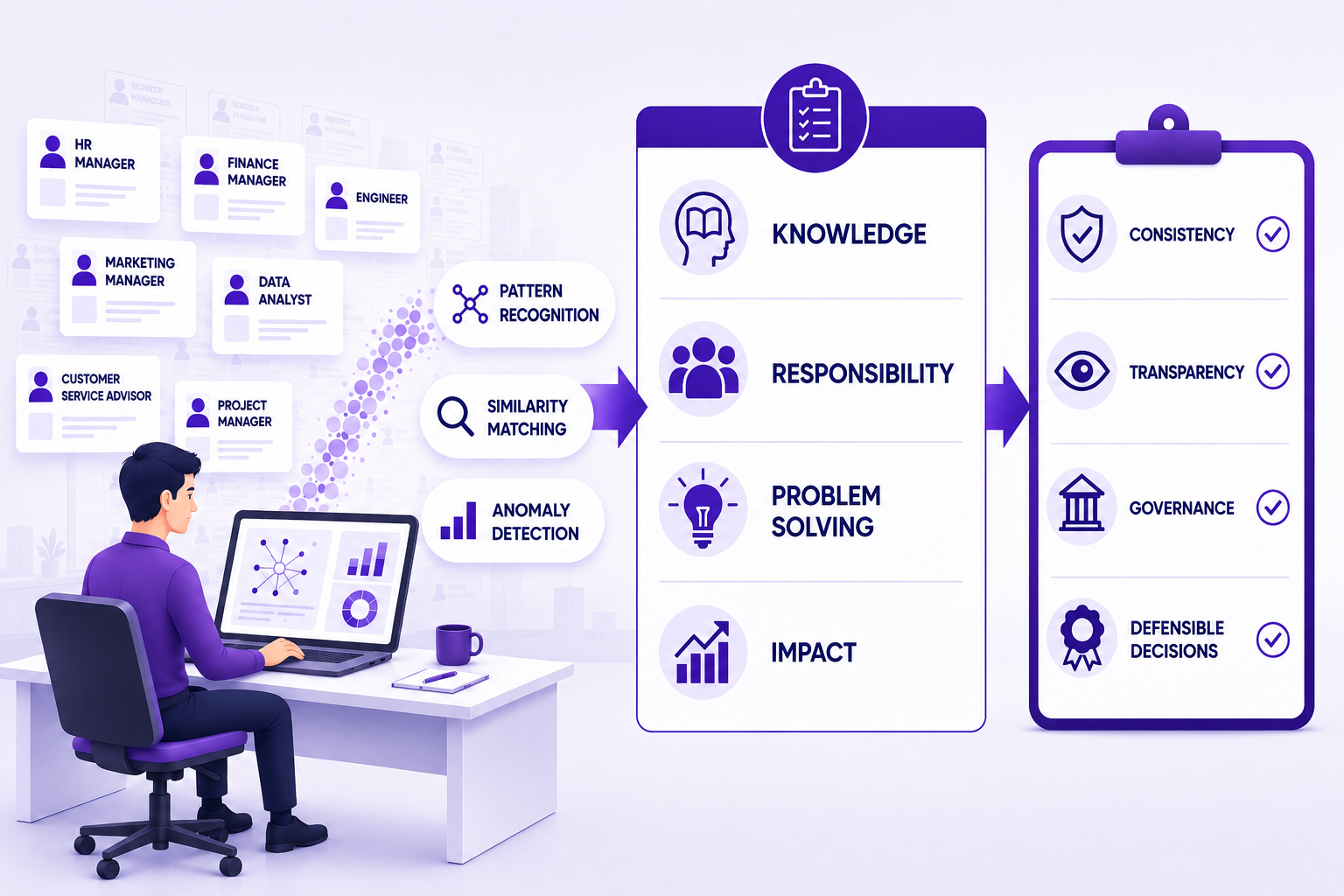
However, before asking whether AI can evaluate jobs, organisations should consider a more important question.
What problem is job evaluation designed to solve?
Job evaluation is not simply an exercise in analysing information. Its purpose is to provide a structured and consistent framework for assessing the relative value of work roles within an organisation. That distinction is important because it highlights a fundamental difference between what AI is designed to do and what job evaluation is designed to achieve.
Job evaluation assesses roles, not people
A key principle of job evaluation is that frameworks assess the role itself rather than the individual performing it.
Evaluation frameworks typically focus on factors such as scope of responsibility, decision-making authority, required knowledge and experience, and organisational impact. These factors are designed to describe the requirements of the role, not the performance, capability or characteristics of the person occupying it.
AI systems used in HR often analyse datasets that combine information about jobs with information about people, including performance measures, skills data or historic pay information. When this happens, the distinction between analysing roles and analysing patterns relating to employees can become blurred.
Even where AI tools analyse job descriptions alone, they are interpreting documentation that may vary considerably in quality, detail and accuracy. Experienced evaluation panels often recognise these limitations and apply professional judgement to assess the true scope and complexity of a role.
Market pricing and job evaluation solve different problems
Much of the current enthusiasm surrounding AI in reward stems from its ability to analyse large volumes of market data. AI tools can identify patterns in salary benchmarks, skills demand and job descriptions across labour markets, providing valuable insights into external pay competitiveness.
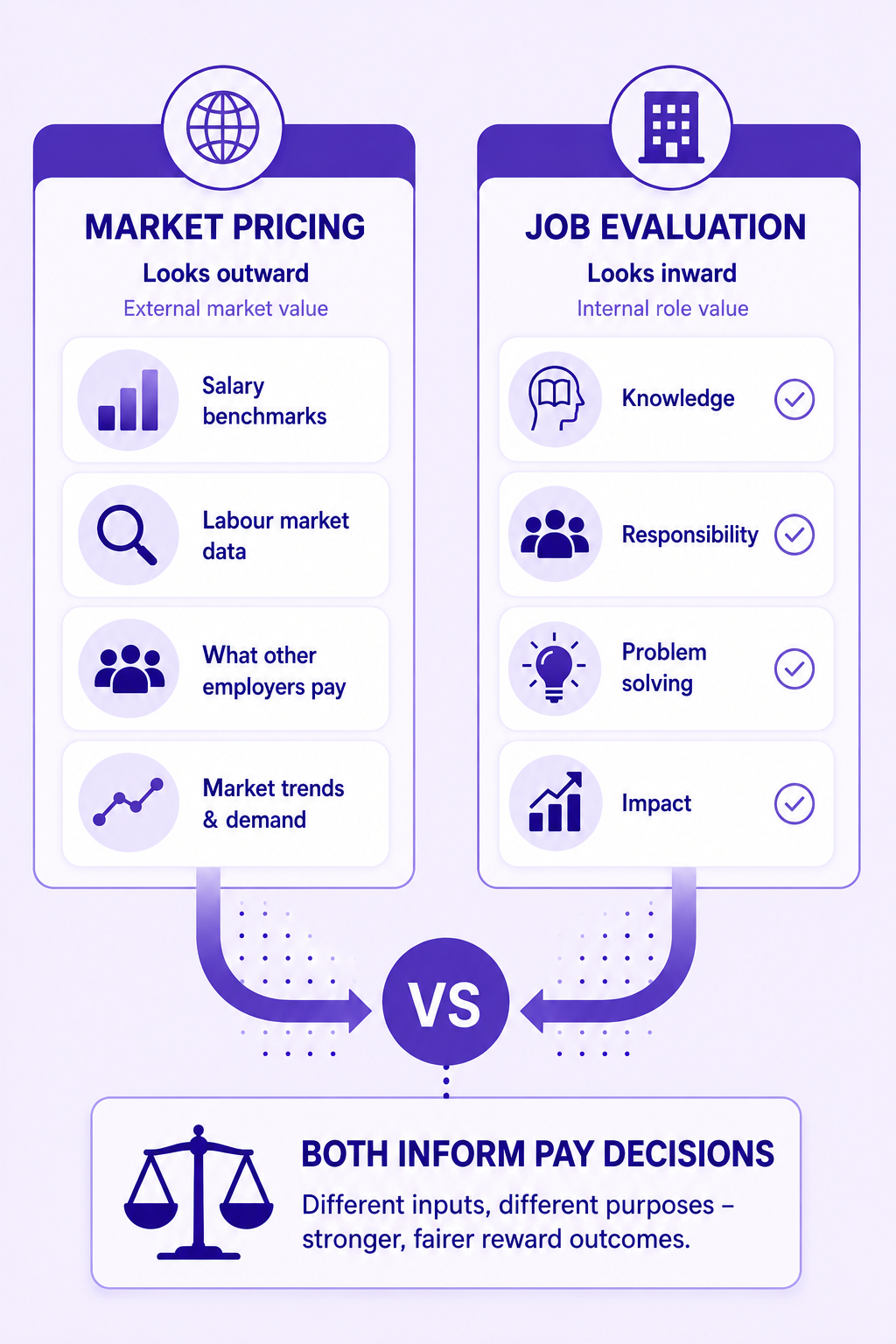
However, market pricing and job evaluation solve fundamentally different problems.
Market pricing looks outward. It helps organisations understand what other employers are paying for similar roles and how competitive their reward packages are within the labour market.
Job evaluation looks inward. It establishes consistent internal value relationships between roles within an organisation, helping ensure that differences in responsibilities, accountability and organisational impact are recognised appropriately.
Even if AI becomes increasingly effective at analysing labour market data, organisations will still need a framework for determining how roles relate to one another internally. Understanding what the market pays and understanding the value of work within an organisation are not necessarily the same thing.
The real risk: AI without governance
Much of the discussion surrounding AI focuses on what the technology can do. Yet the more important question is how organisations choose to use it.
AI is highly effective at identifying patterns within large volumes of information. However, job evaluation has never been solely about analysing information. It is about applying a consistent framework to assess the relative value of roles across an organisation.
Without that framework, AI can only work with the information and patterns available to it. Those patterns may reflect historic organisational structures, labour market trends or previous decisions that were never designed to provide a consistent basis for evaluating work.
The risk is not that AI reaches the wrong conclusion. The risk is that organisations begin to treat AI-generated outputs as evaluation decisions rather than inputs into a broader evaluation process.
As AI tools become increasingly capable, organisations may find it tempting to place greater reliance on automated recommendations. However, decisions relating to jobs, grading structures and pay still require a clear methodology and effective governance to ensure outcomes remain fair, transparent and defensible.
Organisations must be able to explain how evaluation outcomes were reached. Structured frameworks provide transparency by documenting the factors considered, how those factors were assessed and how different roles were compared. While AI can support analysis, organisations still require governance structures that ensure evaluation decisions remain consistent, transparent and defensible over time.
Where AI can add value
None of this suggests that AI has no role to play within job evaluation. In fact, AI has considerable potential to support organisations in managing and analysing large volumes of evaluation data.
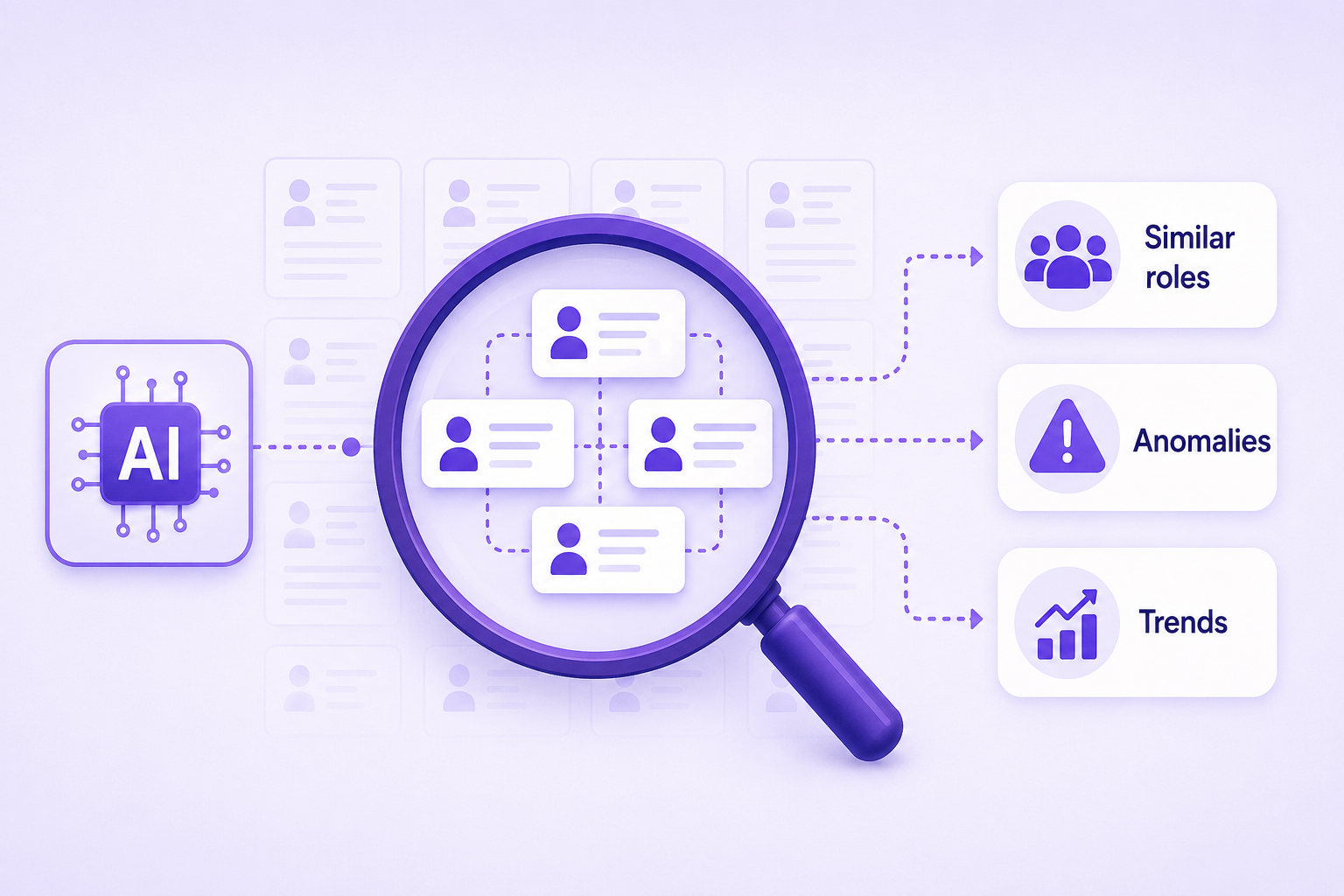
AI tools can help identify incomplete or inconsistent job descriptions, compare roles with similar characteristics, highlight potential anomalies in evaluation outcomes and support moderation discussions by identifying comparable roles across an organisation.
For organisations managing large and complex job populations, AI may also help summarise evaluation evidence and identify trends that would otherwise be difficult to detect manually.
Used in this way, AI acts as an analytical assistant rather than the decision-maker. It enhances the efficiency of the process without replacing the structured frameworks that underpin consistent evaluation outcomes.
The challenge of maintaining consistency over time
One of the ongoing challenges within job evaluation is maintaining consistency as organisations evolve.
Roles change, new jobs are created and different evaluation panels may interpret factors slightly differently over time. Even well-designed frameworks can experience what reward professionals sometimes describe as evaluation drift, where similar roles gradually begin to be evaluated differently.
Organisations frequently discover that roles with broadly similar levels of responsibility have been evaluated differently because they were assessed years apart, by different panels and under different organisational circumstances. These differences do not necessarily indicate a flaw within the framework itself. More often, they reflect the practical challenge of maintaining consistency over long periods of time.
Technology, including AI-assisted analysis, can help identify these potential inconsistencies across large job populations and support periodic governance reviews. However, the framework itself remains essential in determining how those findings should be interpreted and addressed.
The future is augmented, not automated
Artificial intelligence will almost certainly become an increasingly important part of job evaluation. Its ability to analyse information, identify patterns and surface potential inconsistencies offers genuine opportunities to improve efficiency and support better decision-making.
However, organisations should be cautious about viewing job evaluation as simply a data analysis exercise. The purpose of job evaluation has never been to process information. Its purpose is to apply a consistent framework for assessing the relative value of work.
As organisations continue to explore AI, the most successful approaches are likely to combine the strengths of both. Technology can help analyse and compare information at a scale that would be difficult to achieve manually. Structured evaluation frameworks provide the consistency, transparency and governance needed to ensure those insights are applied fairly.
The future is unlikely to be a choice between AI and job evaluation. It is more likely to be a combination of both, where technology supports the process, but responsibility for determining the value of work remains grounded in a structured and consistent framework.
AI can identify patterns in work. Job evaluation exists to determine the value of work. Those are not necessarily the same thing.